About Cyanotype
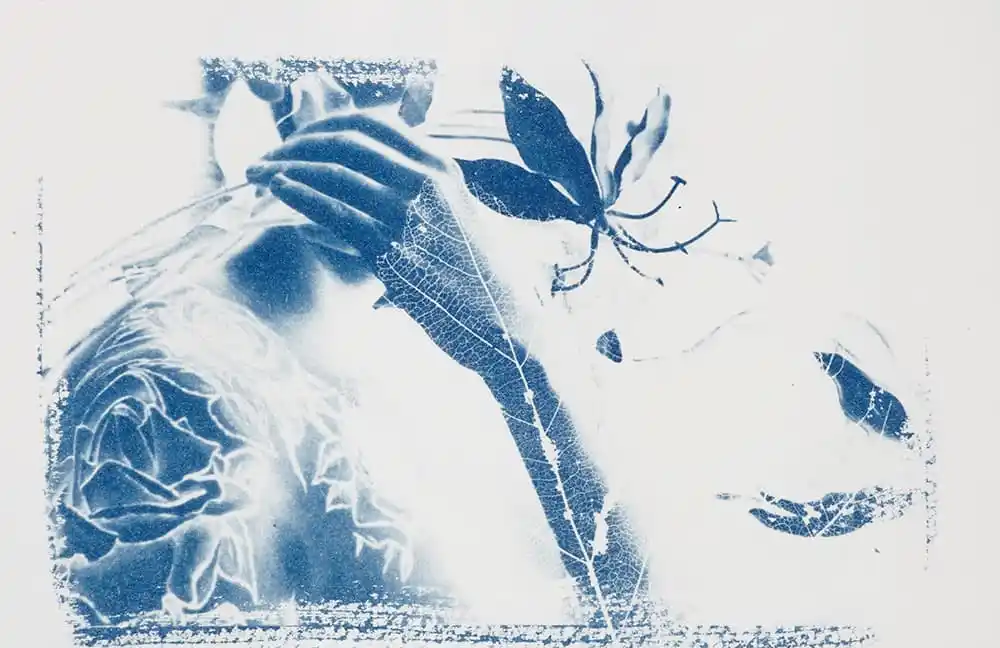
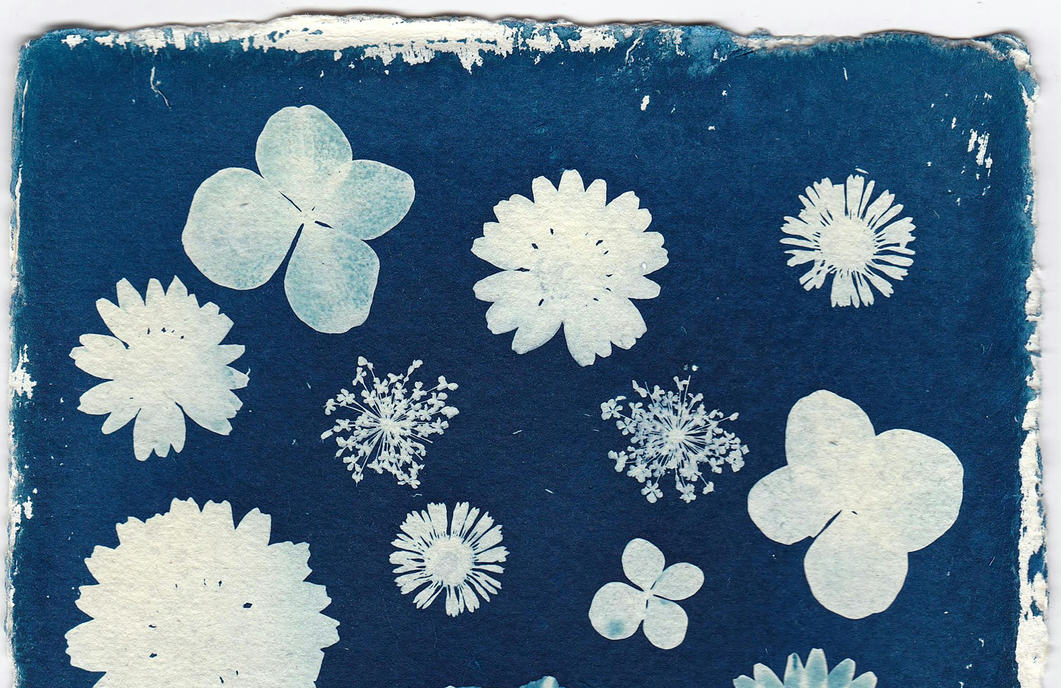
Cyanotype is a historical photographic printing process discovered by British scientist Sir John Herschel in 1842. Unlike conventional photographic techniques that utilize silver salts, cyanotype uniquely relies on iron compounds as its photosensitive agents (Ware, 1998). This method is characterized by its distinct cyan-blue hues, widely recognized today as "Prussian Blue" (Kmet et al., 2023).
Cyanotype served as a means for reproducing notes and diagrams. In 1843, botanist Anna Atkins famously used the technique to create Photographs of British Algae, often considered the first book illustrated entirely with photographs, thus establishing cyanotype as both a scientific and artistic medium (Kmet’ et al., 2023; Jungles, 2019).
By the early 20th century, cyanotype became widely adopted in architecture and engineering for reproducing technical drawings. These blue-and-white prints were economical, easy to produce, and light-sensitive only to ultraviolet rays, which made them ideal for large-format duplication. This utilitarian use gave rise to the now-common term “blueprint” (Ware, 1998; Kmet’ et al., 2023). Though eventually replaced by more advanced methods, the cyanotype blueprint left a lasting linguistic and visual legacy.
Steps of Cyanotype
How to Create Your Artwork Step-by-Step with Cyanotype
1. Preparing
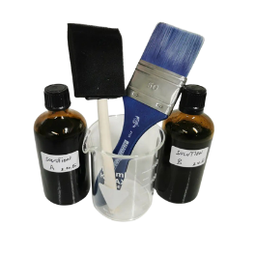
Mix two chemicals (ferric ammonium citrate and potassium ferricyanide) separately in water and then combine them. This forms a UV-sensitive solution used to coat surfaces (Jungles, 2019).
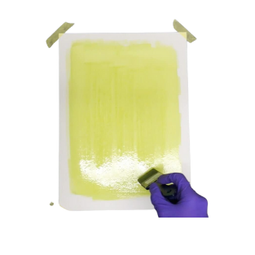
2. Coat the material
Apply the sensitizer evenly onto paper, fabric, or other absorbent materials in a dim environment to avoid premature exposure. Let the material dry fully before proceeding.
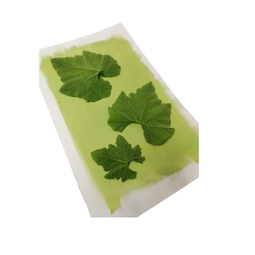
3. Exposure
Place objects onto the coated material and expose it to sunlight or ultraviolet light. The areas exposed to UV undergo a photochemical reduction, which later forms the image (Kmet’ et al., 2023).
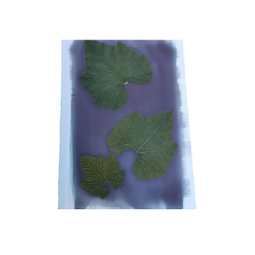
4. Developing
Rinse the exposed material with clean water. This washes away unreacted chemicals and reveals a white-and-blue image—the iconic result of the cyanotype process (Ware, 1998).
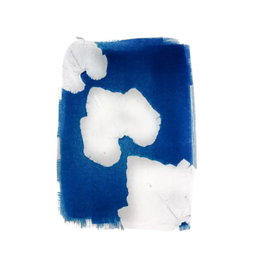
5. Drying & Fixing
Allow the material to dry completely. The blue color deepens and stabilizes as it oxidizes during drying, resulting in a permanent Prussian blue print (Anderson, 2019).
1. Preparing
Mix two chemicals (ferric ammonium citrate and potassium ferricyanide) separately in water and then combine them. This forms a UV-sensitive solution used to coat surfaces (Jungles, 2019).
2. Coat the material
Apply the sensitizer evenly onto paper, fabric, or other absorbent materials in a dim environment to avoid premature exposure. Let the material dry fully before proceeding.
3. Exposure
Place objects onto the coated material and expose it to sunlight or ultraviolet light. The areas exposed to UV undergo a photochemical reduction, which later forms the image (Kmet’ et al., 2023).
4. Developing
Rinse the exposed material with clean water. This washes away unreacted chemicals and reveals a white-and-blue image—the iconic result of the cyanotype process (Ware, 1998).
5. Drying & Fixing
Allow the material to dry completely. The blue color deepens and stabilizes as it oxidizes during drying, resulting in a permanent Prussian blue print (Anderson, 2019).
1. Preparing
Mix two chemicals (ferric ammonium citrate and potassium ferricyanide) separately in water and then combine them. This forms a UV-sensitive solution used to coat surfaces (Jungles, 2019).
2. Coat the material
Apply the sensitizer evenly onto paper, fabric, or other absorbent materials in a dim environment to avoid premature exposure. Let the material dry fully before proceeding.
3. Exposure
Place objects onto the coated material and expose it to sunlight or ultraviolet light. The areas exposed to UV undergo a photochemical reduction, which later forms the image (Kmet’ et al., 2023).
4. Developing
Rinse the exposed material with clean water. This washes away unreacted chemicals and reveals a white-and-blue image—the iconic result of the cyanotype process (Ware, 1998).
5. Drying & Fixing
Allow the material to dry completely. The blue color deepens and stabilizes as it oxidizes during drying, resulting in a permanent Prussian blue print (Anderson, 2019).
Cyanotype artist in Aussie
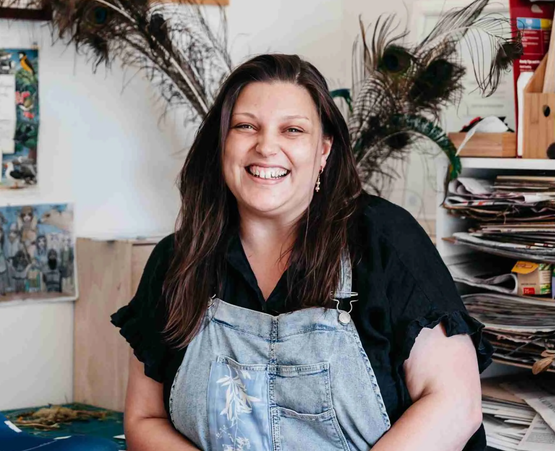
Dr. Jessica Hodgson (Jess)
Dr. Jessica Hodgson is an ecologist and artist based in Australia, specializing in cyanotype artworks inspired by native flora and fauna. Her practice often incorporates natural elements such as leaves and feathers, exposed using sunlight and sensitized paper to create vivid Prussian blue prints. Through her brand Blue Bower Art, she offers a range of original artworks, gifts, and wearable items that reflect the intricate beauty of the natural world.

Liz Turnbull
Liz Turnbull is a versatile Australian artist whose recent exhibition Blue Print, held at the historic Whaling Station in Albany, Western Australia, explores the intersection of cyanotype and marine-inspired imagery. Her work draws deeply from ocean life, using alternative chemistry methods in the cyanotype process. By incorporating everyday kitchen materials—such as vinegar, salt, and citric acid—she manipulates the traditional cyanotype palette to produce rich textures and tonal variations, evoking the ethereal and mysterious qualities of underwater environments.
蓝晒
Cyanotypie
サイアノタイプ
Cianotipia
藍曬
Cianotipia
सायनोटाइप
সায়ানোটাইপ
蓝晒
Cyanotypie
サイアノタイプ
Cianotipia
藍曬
Cianotipia
सायनोटाइप
সায়ানোটাইপ
蓝晒
Cyanotypie
サイアノタイプ
Cianotipia
藍曬
Cianotipia
सायनोटाइप
সায়ানোটাইপ